Rotator cuff tear
A tear in the large tendon cap, typically with pain at night and loss of strength when you lift the arm overhead.
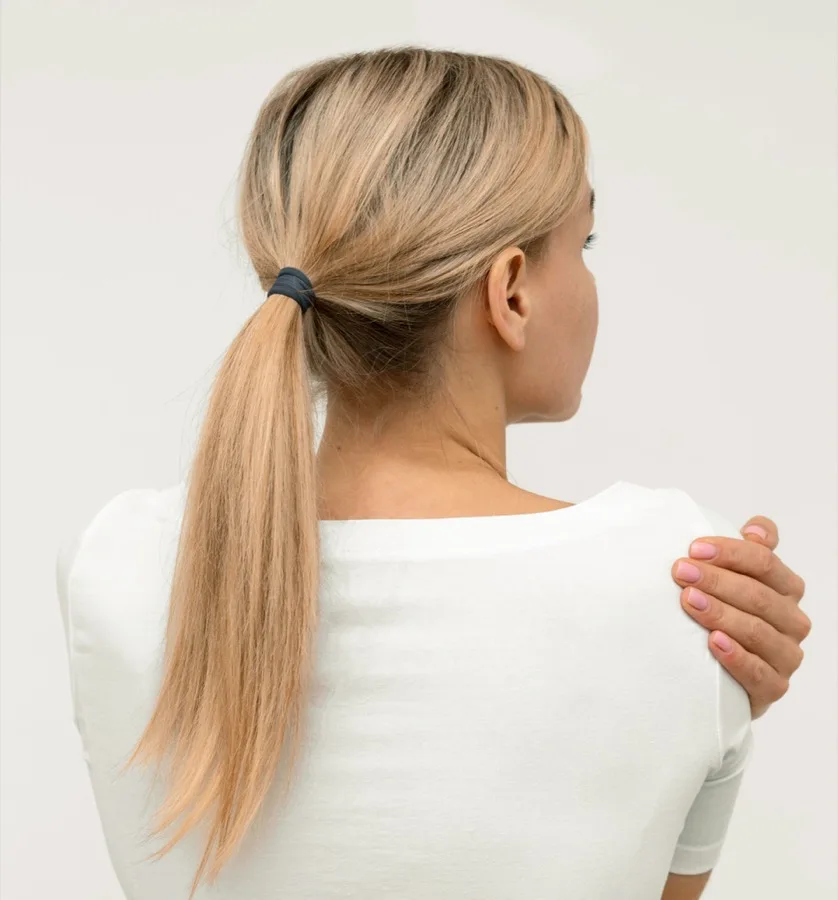
Learn moreThe shoulder is a joint with a complex structure. A broad humeral head sits against a small, shallow socket, so the joint is guided less by bone than by the labrum, the capsule with its ligaments and the muscles; the rotator cuff, a cap of four muscles and their tendons, centres the head in the socket and lifts and rotates the arm. Because the shoulder connects the trunk and the arm, you notice problems in everyday life straight away, when you carry or lift something and when you play sport. I examine your shoulder in detail, with ultrasound in my practice, and then we discuss together which treatment suits you.
Common complaints
I regularly treat these conditions:
Treatment options
Wherever possible I treat conservatively; if an operation is necessary, I prefer a minimally invasive approach. Which route suits you depends on your symptoms and your injury, and we decide it together after the examination. With calcific tendinitis, frozen shoulder or early osteoarthritis, treatment usually begins conservatively. I operate early, on the other hand, on a shoulder dislocation with instability, a torn pectoralis tendon or a displaced fracture. I usually stabilise the shoulder arthroscopically, while I reattach the pectoralis tendon in an open procedure.
Frequently asked
No. Whether a repair makes sense depends on the size and location of the tear, your age, the load you place on the shoulder and your symptoms. With smaller partial tears caused by wear, treatment without a repair can be sufficient; with a fresh tear caused by an accident, I discuss a repair early on. We decide together once the examination is complete.
At first I treat calcific tendinitis conservatively, with focused and radial shockwave therapy and targeted removal of the calcium. If the symptoms persist despite this treatment, I can remove the calcium deposit arthroscopically, through small incisions.
Recovery depends on the procedure. Working through small incisions spares the surrounding tissue, but repaired tendons and ligaments still need time to heal. I discuss the expected course and the rehabilitation plan with you before the procedure.
As a rule, yes. The tendon of the large chest muscle does not grow back onto the bone by itself and retracts over time. That is why I also reconstruct a partial tear, because the remaining part does not carry the pressing load in the long run, and as early as possible. I operate through a small, tissue-sparing incision at the front of the armpit. Tears within the muscle belly I mainly treat conservatively. If you suspect such a tear, I examine you at short notice.
Diagnoses
A tear in the large tendon cap, typically with pain at night and loss of strength when you lift the arm overhead.
Learn moreA calcium deposit in the tendon, which often causes severe pain while it dissolves, at night as well.
Learn moreAn inflamed bursa, formerly called impingement, that hurts when you lift the arm overhead.
Learn moreThe painfully stiffened shoulder and its typical course in three phases.
Learn moreInjuries to the labrum, capsule and AC joint after a dislocation, and how I stabilise the shoulder arthroscopically.
Learn moreTears of the long biceps tendon at the shoulder and of the distal biceps tendon at the elbow, two different injuries of the same muscle.
Learn moreA tear of the chest muscle tendon, usually during bench pressing, which should be treated early.
Learn moreWear of the cartilage in the shoulder joint, which I treat conservatively or surgically.
Learn moreThe possible causes when it is not yet clear where the pain comes from.
Learn moreFurther specialties

Dr. med. Martin Eigenschink
Specialist in Orthopaedics and Traumatology · Specialist in elbow, shoulder and hand surgery
Surgical and conservative treatment of the elbow, shoulder and hand, preferably minimally invasive. Practice at the Orthozentrum Döbling, 1190 Vienna. More about my background
Medical notice: The contents of this page serve as general information. They do not replace a medical examination, diagnosis or individual advice. Medicine is a constantly evolving field — despite careful research, no guarantee can be given that the content is fully up to date.