Tennis & golfer's elbow
The irritated tendon origin on the outer and inner side — and what helps in which order.
Read moreI am a specialist in elbow, shoulder and hand surgery; the elbow is my specialist field. I treat injuries and conditions of this joint across their full range — conservatively, arthroscopically or with open surgery, depending on the findings. Pain or restricted movement at the elbow affects the whole arm, from shaking hands to lifting and sport.
In short
Elbow complaints usually come from an irritated tendon origin (tennis or golfer's elbow), a compressed nerve, a ligament torn in a dislocation, a tendon pulled off the bone or a block inside the joint. I assess them through conversation, clinical examination and ultrasound in the practice; I arrange an X-ray or MRI when needed. With irritation, stiffness or wear, treatment often starts conservatively; tendon tears, dislocations with persisting instability and displaced fractures are treated surgically at an early stage. We make the decision together, based on the findings.
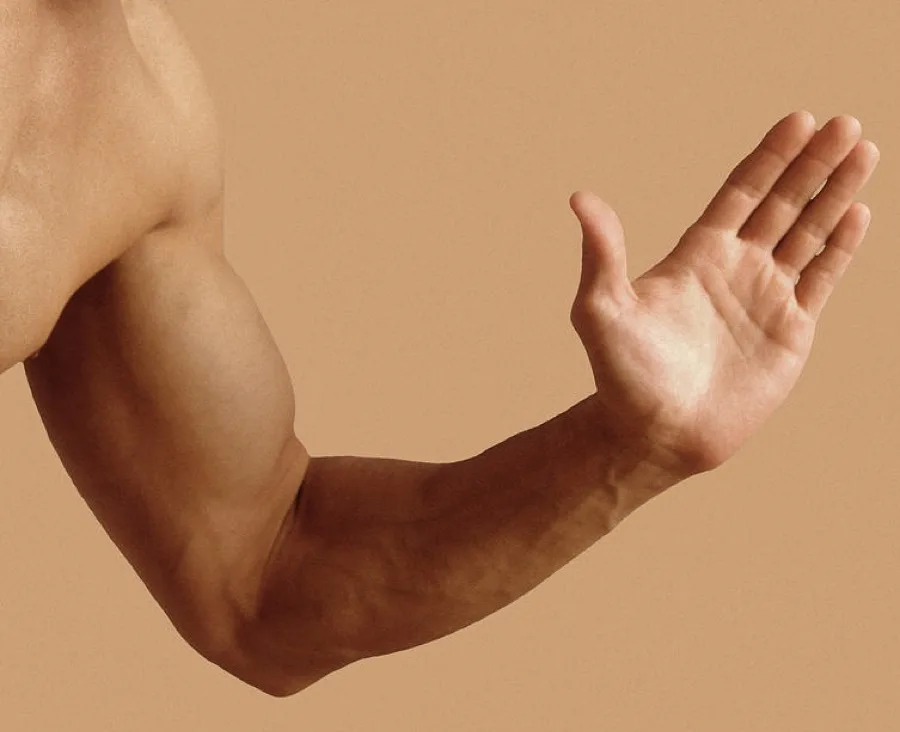
Range of treatment
These are the conditions I treat at the elbow — each has its own page:
It starts with the conversation: where it hurts, since when and under which load, and whether there was an accident. In the clinical examination I test the tendon origins, the stability of the collateral ligaments, the course of the ulnar nerve and the range of movement. With the ultrasound in the practice, tendons, joint capsule and nerve can be assessed straight away. I arrange an X-ray or MRI when needed, and a nerve conduction study through a neurologist. Please bring existing findings and images; a referral is not required.
Treatment options
The findings decide which route fits. With an irritated tendon origin, stiffness or wear I usually begin conservatively. With a torn distal biceps tendon, an elbow dislocation with persisting instability or a displaced radial head fracture, on the other hand, I discuss surgery early: arthroscopically where possible, with open surgery where the reconstruction of a ligament or tendon requires it.
In an elbow arthroscopy (keyhole surgery of the joint) I introduce a camera and fine instruments into the joint through small incisions. I use open surgery where a ligament has to be replaced, a tendon reattached to the bone or a fracture stabilised. Which route suits your elbow depends on the findings; I discuss the procedure and the aftercare with you in detail beforehand.
I carry out necessary procedures at the ATOMOS Klinik Währing, the Privatklinik Döbling or the Rudolfinerhaus, and I accompany you from planning through the procedure to aftercare.
My practice is a private practice, in Austria a Wahlarztordination. I do not settle directly with any public health insurer; you receive an invoice and submit it to your insurer — on request I take care of the submission for you. For operations, direct settlement with your supplementary insurance is possible. The page on private practice and reimbursement describes the process in detail.
Frequently asked questions
In tennis elbow (lateral epicondylitis) the tendon origin on the outer side of the elbow is irritated. Conservative treatment usually comes first here: adjusting the load, focused shockwave therapy, ultrasound-guided injection or platelet-rich plasma (PRP). If the complaints persist despite this treatment, the tendon origin can also be treated arthroscopically.
A stiff elbow can no longer be fully straightened or bent, for example after an injury, an operation or with osteoarthritis. The cause is often a scarred joint capsule, bony spurs or loose bodies. If conservative treatment is not enough, scar tissue and bony spurs can be released arthroscopically or through open surgery. This procedure is called arthrolysis; its aim is to restore movement.
It starts with a conversation about how the injury happened and a clinical examination in which I test the stability of the collateral ligaments. Ultrasound is available in the practice, and I arrange an MRI when needed. If it is still unclear how stable the joint is, this can be assessed directly during an arthroscopy. Whether a ligament reconstruction is needed depends on the findings.
If the biceps tendon tears away from the bone at the elbow, strength is lost above all when bending the elbow and turning the forearm outwards. For active patients I therefore discuss refixation early, meaning reattaching the tendon to the radius. Whether to operate depends on the findings and on the demands you place on your arm; we make the decision together.
In cubital tunnel syndrome the ulnar nerve is compressed on the inner side of the elbow: tingling and numbness in the ring and little finger, often at night, later also loss of strength in the hand. I examine clinically and with ultrasound; I arrange the nerve conduction study through a neurologist. If the complaints persist or the study shows significant damage, surgical release of the nerve can be advisable.
Not with every finding. Loose bodies, a scarred joint capsule, trapped synovial folds and some tendon-origin problems can be treated arthroscopically through small incisions. Torn ligaments, a torn-off distal biceps tendon and many fractures I treat with open surgery, so that I can attach the structures to the bone under direct vision.
Diagnoses
Each condition has its own page covering causes, examination and the course of treatment.
The irritated tendon origin on the outer and inner side — and what helps in which order.
Read moreAfter a dislocation or chronic: ligament reconstruction on the outer and inner side.
Read moreThe dislocation, the injuries that come with it and when an operation is needed.
Read moreA tear of the tendon at the radius: loss of strength when turning, and refixation to the bone.
Read moreA tear of the extensor tendon at the tip of the elbow, and its refixation.
Read moreRestricted movement caused by scarring, osteoarthritis and loose bodies.
Read moreWear of the joint cartilage with pain and increasingly restricted movement.
Read moreA trapped synovial fold that snaps and hurts inside the joint.
Read moreA compressed ulnar nerve: numbness in the ring and little finger, loss of strength.
Read moreA typical elbow fracture after a fall onto the outstretched hand.
Read moreKeyhole surgery of the elbow and what it is used for.
Read moreNot sure where it comes from? Complaints sorted by location and trigger.
Read moreOther specialist areas

Dr. med. Martin Eigenschink
Specialist in Orthopaedics and Traumatology · Specialist in elbow, shoulder and hand surgery
Surgical and conservative treatment of the elbow, shoulder and hand, preferably minimally invasive. Practice at the Orthozentrum Döbling, 1190 Vienna. More about my background
Medical notice: The contents of this page serve as general information. They do not replace a medical examination, diagnosis or individual advice. Medicine is a constantly evolving field — despite careful research, no guarantee can be given that the content is fully up to date.